The controversy surrounding the regulation of flavored e-cigarettes has once again come under the spotlight in the United States. Recently, authorities in Virginia requested the Fourth Circuit Court of Appeals to reinstate a previously suspended ban on flavored e-cigarettes. This development signifies that the struggle between local governments and the judicial system over regulatory authority and legality continues, and it also puts renewed pressure on the e-cigarette industry due to policy uncertainty.
From a background perspective, this is not the first time Virginia has taken a strong stance on flavored e-cigarettes. Several years ago, the state government, based on considerations of protecting minors and public policy, pushed for measures to restrict or ban certain flavored e-cigarettes. However, these measures have repeatedly faced legal challenges during implementation, and some bans have been suspended due to procedural or jurisdictional issues.
This appeal to the Fourth Circuit Court of Appeals to “reinstate enforcement” is based on the previous setbacks to the ban. The state government argues that the original ban has clear public policy objectives and is within the scope of legislative authorization, and therefore should continue to be implemented. Opponents, however, point out that the relevant bans may have exceeded their authority or contained procedural flaws during their formulation and implementation, requiring further review.
The attitude of the Fourth Circuit Court of Appeals has therefore become a focal point of attention for all parties. This court covers multiple states, and its rulings often have significant precedent-setting implications. If it supports the reinstatement of the ban, it will not only affect the local market in Virginia but may also have a ripple effect on similar policies in other states.
From an industry perspective, flavored e-cigarettes have always been one of the core issues of regulatory controversy. Unlike the broader discussion of whether e-cigarettes should be allowed at all, the issue of flavors is closer to the consumer level and more likely to attract public attention. Supporters of restrictions argue that flavor designs easily attract young people; while opponents emphasize that flavor choice is an important preference for adult consumers, and a complete ban could lead to alternative risks and market disruption.
It is against this backdrop of controversy that the judicial system becomes a crucial “arbiter” of policy direction. Virginia’s appeal is essentially an attempt to provide a more solid legal foundation for administrative regulation through judicial confirmation. If the court affirms the state government’s position, the legality of the ban will be strengthened; conversely, it may prompt regulatory authorities to re-examine their policy tools. It’s worth noting that discussions in these types of cases often don’t directly involve the attributes of the product itself, but rather focus on the division of authority, the legal basis, and whether the enforcement procedures are compliant. This also means that the judgment doesn’t necessarily represent a value judgment on a particular type of product, but rather reflects the definition of rights and responsibilities within the legal framework.
For e-cigarette companies, this “pending” state is often more challenging than a clear ban or permit. Policies may change with the rulings, requiring companies to build in more flexibility in product planning, inventory management, and market strategies. This uncertainty is gradually spreading to the manufacturing side.
From a manufacturing perspective, whether flavored e-cigarettes are allowed to be sold directly impacts product structure and order cycles. Whether it’s closed-system pods or open systems, the flavor configurations are often determined in the initial design phase. Once policies change, related products may need to adjust formulas, change labels, or even withdraw from specific markets.
In this process, factories undertaking OEM and ODM business become a crucial link connecting policy and the market. In the OEM model, factories primarily produce according to the brand’s established specifications; in the ODM model, factories often need to be involved earlier, assisting brands in evaluating the feasibility of different flavor options under the regulatory environment. This difference increases manufacturing companies’ sensitivity to policy changes.
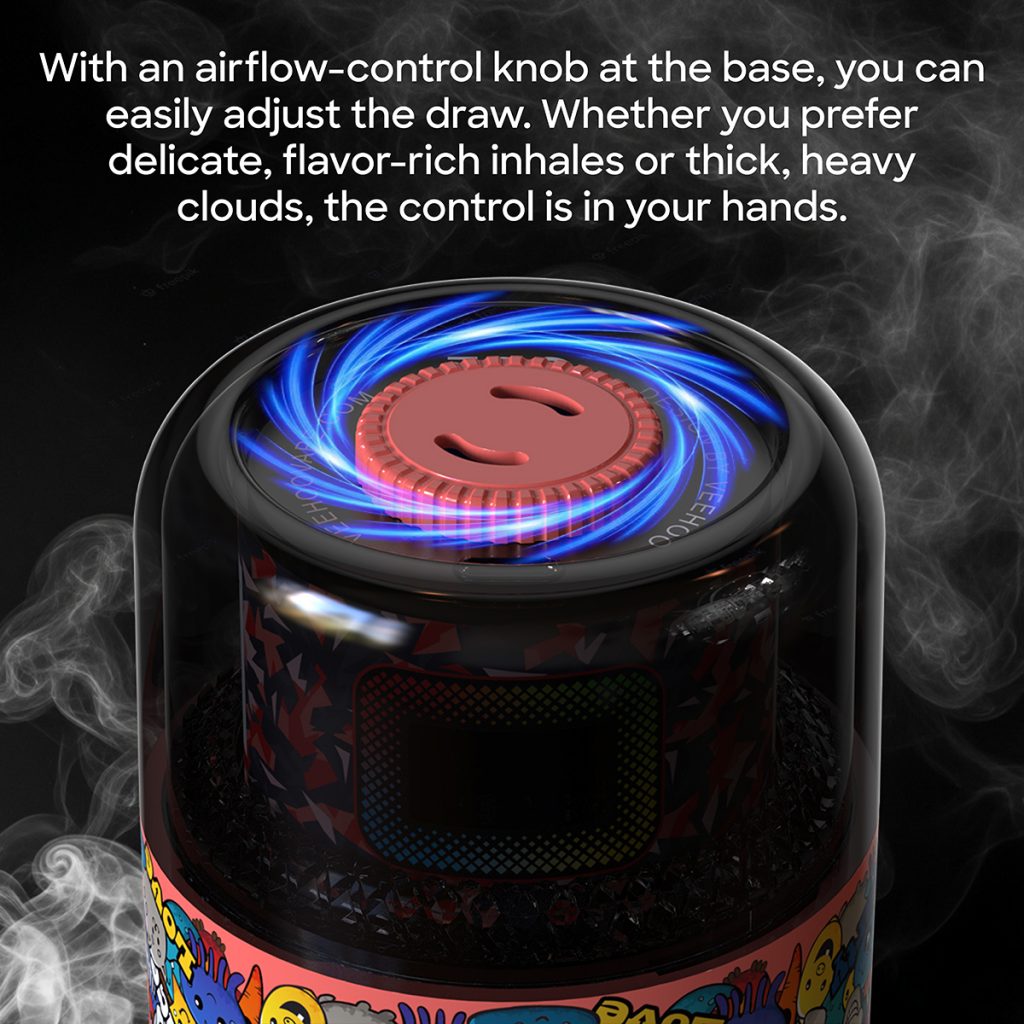
Taking VEEHOO as an example, its role in the industry is more focused on manufacturing and solution support. Through OEM cooperation, VEEHOO provides production services for brands in different markets; through the ODM model, it participates in the early design of product structure and flavor combinations. Facing the divergent attitudes of different US states towards flavored e-cigarettes, these factories typically provide corresponding compliance advice based on the regulatory requirements of their clients’ target markets.
It’s important to emphasize that this participation is not about guiding market trends, but rather an adaptation based on regulatory differences. For example, in states with stricter flavor regulations, the design solutions will be more cautious, reducing configurations that might cause controversy; in markets with relatively clear regulations, the focus is on meeting local compliance requirements. This operational logic reflects the realistic choices made by the manufacturing side in a complex environment.
Returning to the judicial process in Virginia, the outcome of this case may also influence companies’ assessment of “state-level regulatory stability.” If the ban is reinstated, it would mean that the state government has considerable discretion in this area; if it continues to be blocked, it may prompt more companies to challenge similar policies through legal means.
From a broader perspective, the United States has long had a parallel system of federal and state regulation of e-cigarettes. The federal government sets the basic framework, while state and local governments supplement or strengthen it according to their own circumstances. This structure provides flexibility but also leads to fragmentation. Companies often have to deal with multiple sets of rules simultaneously, increasing compliance costs.
Flavored e-cigarettes are a prime example of this fragmented regulation. Some states adopt strict restrictions, some remain relatively open, and others are in a phase of repeated policy adjustments. Virginia’s action before the Fourth Circuit Court of Appeals is an attempt to secure clearer legal support for its policies within this framework.
On the public opinion front, this case has also sparked differing views. Some commentators believe that resolving policy differences through judicial means helps improve the transparency and predictability of rules; others argue that frequent lawsuits and appeals may prolong uncertainty, which is detrimental to market stability.
For manufacturers, regardless of the outcome, understanding the policy logic in advance and maintaining flexible solutions are necessary responses. Factories like VEEHOO often provide clients with different design options to cope with rapidly changing policies. This approach is not about pursuing market expansion, but rather based on risk management considerations in long-term cooperation.
In the long run, the regulatory controversy surrounding flavored e-cigarettes is likely to continue for some time. Judicial rulings may resolve issues in a particular state or at a particular stage, but they cannot provide a permanent solution. True stability may require clearer legislative authorization and more consistent regulatory standards.
Virginia’s appeal to the Fourth Circuit Court of Appeals to reinstate the ban is just one link in this complex process. It not only affects the direction of the local market but also reminds industry participants that caution and patience are always needed in the interplay between policy, law, and business.
It is foreseeable that the market will remain in a wait-and-see state until the judgment is officially finalized. For companies and factories, understanding the rules, respecting procedures, and improving compliance capabilities remain the practical path to navigate this period of uncertainty. It is through these seemingly calm responses that the future contours of the e-cigarette industry are gradually being outlined.
Tags: ceramic atomizer core, e-hookah (electronic water pipe), OEM ODM, veehoo vape.