Guam recently made a widely discussed adjustment in its school management system. The local education system announced that schools will formally introduce a police response mechanism. Incidents involving minors using or possessing e-cigarettes will no longer be limited to school disciplinary action but will instead be reported to the police, involving law enforcement. This change is seen as a significant “upgrade” in Guam’s response to the issue of e-cigarette use among minors, reflecting the ongoing adjustment of the boundaries between school governance and public safety in some parts of the United States.
From the policy statement, Guam does not simply describe this mechanism as “increased punishment,” but emphasizes collaboration between schools, families, and law enforcement. The education department believes that the presence of e-cigarettes on school grounds is no longer just a matter of school discipline, but a public affair involving the protection of minors and social order, thus requiring a more formal handling process.
This decision did not come out of thin air. In recent years, many middle and high schools in Guam have reported a continuous increase in the number of e-cigarette-related incidents, with some students using, carrying, and even privately trading e-cigarette products on campus. Although schools had previously tried to manage the situation through confiscation, suspension of classes, and parent meetings, the results were less than ideal. Some school officials pointed out that repeated violations were a prominent issue, and existing methods were insufficient to create adequate constraints.
Against this backdrop, referring the incidents to the police was seen as an attempt at “external intervention.” Supporters argued that this would help clarify the seriousness of the problem, make students and families aware of the potential legal consequences of their actions, and thus have a deterrent effect. Opponents worried that prematurely involving the police might exacerbate the stigmatization of minors and even affect their long-term development.
Public information indicates that the Guam Department of Education did not treat all e-cigarette-related behaviors in a uniform manner. In practice, schools will still make initial judgments based on the severity of the offense, but once a clear violation or repeated offense is identified, the police will become part of the handling process. This “tiered response” approach attempts to find a balance between strict management and prudent enforcement.
It is worth noting that Guam’s approach is not an isolated case. In the United States, some states and school districts have also explored similar mechanisms, especially in areas where e-cigarette problems repeatedly occur on campuses. The difference lies in the fact that Guam, as a region with a smaller population and closer community ties, often sees policy changes more readily triggering direct social discussion.
From a social governance perspective, the introduction of police intervention mechanisms in schools reflects a shift in public institutions’ understanding of e-cigarettes. E-cigarettes are no longer merely seen as a “new type of consumer product,” but are increasingly being incorporated into discussions about minors’ behavior and public safety. This shift makes schools a crucial frontline for policy implementation.
In this process, discussions about the boundaries between “education” and “law enforcement” are inevitable. Some educators point out that the core function of schools remains education, not law enforcement, and that introducing police should be a last resort, not a tool for daily management. Others argue that with recurring problems and rising risks, relying solely on school discipline is insufficient to address the real challenges.
From a broader regulatory perspective, Guam’s decision also echoes the overall trend of stricter e-cigarette regulation in the United States. Protective measures for minors are being continuously strengthened at the sales, advertising, and public use levels. Schools, as places where minors are highly concentrated, naturally become a key focus.
This policy signal will also have an impact along the entire industry chain. While schools and police don’t directly interact with manufacturers, changes in the regulatory environment are often reflected in market demands and compliance requirements. Brands need to more carefully assess product distribution and risk exposure when developing market strategies, and manufacturers cannot ignore these changes either.
For factories undertaking OEM and ODM business, policies related to the protection of minors have become a crucial background factor to consider during the design and production stages. How products are packaged, labeled, and differentiated for target audiences are repeatedly discussed under the regulatory requirements of different markets.
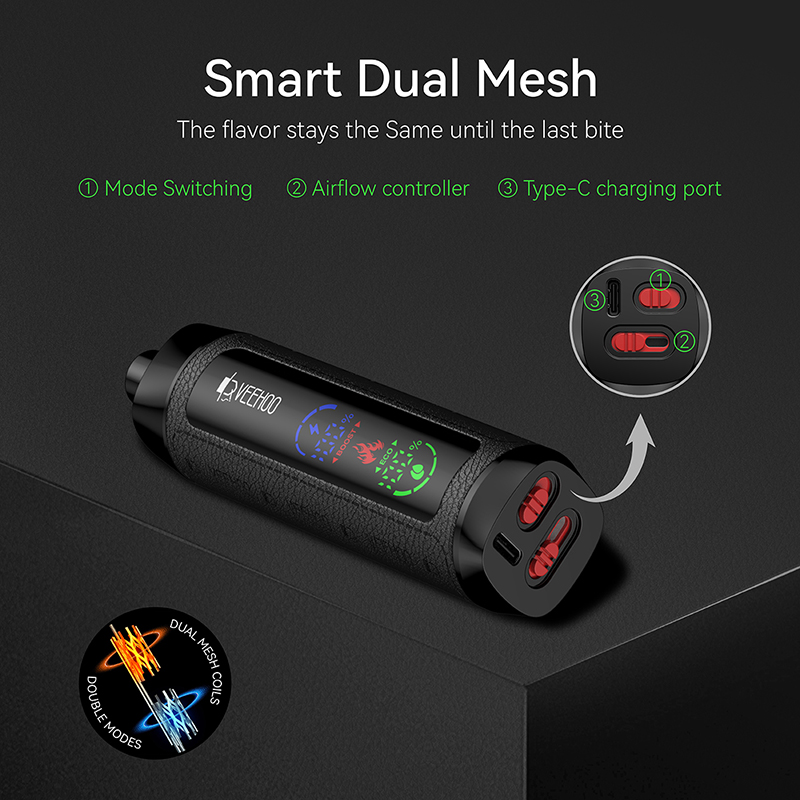
VEEHOO, for example, primarily focuses on manufacturing and solution support. Through OEM partnerships, the factory produces according to customer requirements; in the ODM model, it participates in discussions during the early design phase, assisting clients in understanding the compliance environment of different markets. In regions with increasingly stringent policies on the protection of minors, related solutions typically emphasize a clearer definition of compliance boundaries.
It’s important to emphasize that the role of these factories is not to determine market policy trends, but rather to help partners reduce implementation risks within existing rules. In the US and its territories, policy changes involving schools and minors are often highly sensitive, and any oversight can trigger a chain reaction. Returning to the specific situation in Guam, the introduction of a police intervention mechanism places higher demands on the role of families. Schools have stated that they hope this approach will encourage parents to pay more attention to the issue of e-cigarettes and work together with the school. This statement effectively shifts the policy objective from “single-party punishment” to “multi-party co-management.”
From an implementation perspective, how this mechanism will be effectively implemented remains to be seen. For example, how the police handle cases involving minors after intervention, whether the focus is on cautionary education, and how to avoid unnecessary long-term impacts on students are all focal points of public concern. The answers to these questions will gradually emerge in practice.
From the perspective of public opinion, Guamian society is not entirely united on this policy. Some parents believe that clear legal consequences will help children stay away from risky behaviors; others worry that police intervention may complicate the issue and even affect the child’s mental health. This divergence is a common reality in public policy adjustments.
On a longer timescale, this move may impact the number of e-cigarette incidents on school campuses, but its true significance lies in conveying a clear attitude: issues concerning the health of minors and school order are no longer solely resolved through internal coordination but are incorporated into a broader social governance system.
For the industry, this signal is equally noteworthy. Both brands and manufacturers need to recognize that issues related to minors are becoming highly sensitive areas for regulation and enforcement. Any negligence in this area could have consequences beyond the commercial realm.
Factories like VEEHOO, whose core businesses are OEM and ODM, typically mitigate potential risks by strengthening internal audits and clarifying customer responsibility boundaries when facing different market policy environments. This approach is not an avoidance of market opportunities but rather a consideration of long-term cooperation stability.
Overall, Guam schools’ decision to report e-cigarette incidents involving minors to the police is a symbolic institutional adjustment. It not only reflects the high level of attention paid to the issue of e-cigarettes on school campuses but also demonstrates an extension of public governance thinking from “internal school management” to “social collaboration.”
The effectiveness of this change still needs time to be tested. However, it is certain that this policy has provided a new reference point for related discussions. Regardless of support or skepticism, this policy reminds all parties that the protection of minors is becoming an unavoidable core issue in the e-cigarette debate. Given this reality, finding a balance between education, law enforcement, and industry responsibility will continue to test the wisdom of policymakers and society at large.
Tags: ceramic atomizer core, e-hookah (electronic water pipe), OEM ODM, veehoo vape