Moldova recently passed a new revision to its health regulations, one key aspect of which has attracted widespread attention: the explicit inclusion of online tobacco sales within the scope of restrictions. This signifies that online sales, previously relatively covert and difficult to regulate, are now formally brought under the regulatory purview of public health and market order. For this Eastern European country, this is not merely a technical adjustment, but a significant step in its tobacco control policy moving from offline to online, and from traditional channels to the digital space.
According to official information, the new health regulations do not focus on any specific product form, but rather on sales channels, emphasizing that both traditional and new tobacco products involved in online transactions will be subject to stricter constraints. Regulatory authorities believe that with the widespread use of e-commerce platforms and social media transactions, online sales have become an important supplement to the distribution of tobacco products, and continuing to operate in a regulatory blind spot will weaken the overall effectiveness of existing tobacco control measures.
Previously, Moldova’s tobacco regulation primarily focused on physical retail, with relatively clear regulations on store locations, advertising displays, and target customers. However, in the online environment, relevant rules have long been ambiguous. Transactions involving some products are completed through e-commerce platforms, social media accounts, or instant messaging tools, posing significant challenges to law enforcement. The explicit inclusion of online channels in the restrictions is seen as a systemic response to these changing realities.
From a policy perspective, this adjustment is not sudden. In recent years, the Moldovaian public health department has repeatedly mentioned in its reports that the ways young people access tobacco products are changing, with the convenience and anonymity of online channels making it easier to circumvent age verification and physical supervision. Including online sales in the regulations is based on this trend.
It is worth noting that the new regulations are relatively restrained, emphasizing “inclusion in restrictions” rather than “a blanket ban.” This means that regulatory authorities may make more detailed provisions for different types of platforms and different transaction methods in subsequent supporting documents, rather than simply closing the door to all online channels. This approach also leaves some flexibility for policy implementation.
From a European regional perspective, Moldova’s choice is not isolated. In recent years, many countries have begun to re-examine the legality and regulatory methods of online tobacco sales. Some countries have chosen a complete ban, while others manage it through licensing, real-name authentication, and other methods. Moldova’s revised hygiene regulations are closer to the latter approach: first incorporating online sales into the regulatory framework, then gradually refining the implementation details.
For the local market, this change will directly impact the operating methods of retailers and distributors. Businesses relying on online channels will face stricter compliance requirements and may even be forced to adjust their sales structures. For consumers, the path to obtaining products may change, but the policy itself does not directly address consumer behavior, focusing instead on the distribution环节 (distribution link/stage).
This “source-oriented” regulatory approach will also propagate upstream along the supply chain. Brands need to reassess the compliance risks of online promotion and sales when planning their market strategies, while manufacturers also need to pay attention to changes in channel policies in target markets.
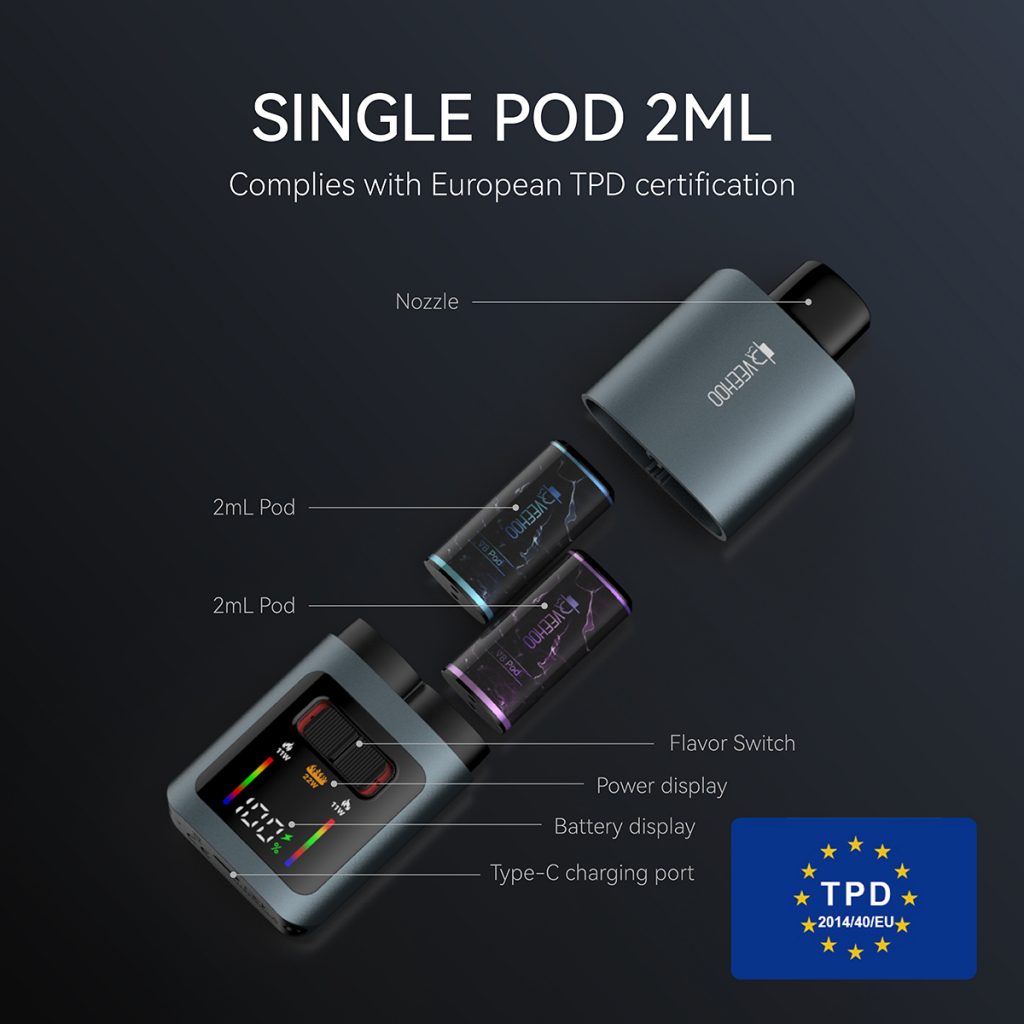
At the manufacturing level, the production of tobacco and new tobacco products often serves multiple national and regional markets. Factories undertaking OEM and ODM business especially need to closely monitor changes in the attitudes of different markets towards sales channels. Whether a product can be sold online is not just a marketing issue; it also affects production aspects such as packaging, labeling, and batch management.
Taking VEEHOO as an example, its role in the industry is primarily focused on manufacturing and solution support, rather than direct retail involvement. Through the OEM model, factories produce according to customer specifications; in ODM collaborations, it assists customers in understanding the regulatory environment of the target market during the product design and planning stages. In markets like Moldova, which are tightening online channels, discussions often begin early in the solution design process.
This involvement does not imply judgment or evaluation of policies, but rather provides technical support at the compliance level. For example, different sales channels may have different labeling requirements or information presentation methods, and factories need to allow for these differences during the production stage. Especially in cross-border supply chains, a product may be targeted at multiple markets simultaneously, and policy changes at any stage can trigger a chain reaction of adjustments.
From a regulatory enforcement perspective, the biggest challenge in restricting online sales lies in implementation. Online transactions cross geographical boundaries and involve diverse platform types, making it difficult for health departments alone to complete all regulatory tasks. Therefore, the adoption of new regulations also means that future collaboration mechanisms with market regulators, communications management departments, and other relevant departments may be necessary.
Moldova’s official statement mentioned that one of the goals of the regulations is to improve the consistency of rules and avoid inconsistencies between online and offline standards. This statement reflects the regulatory authorities’ desire to reduce gray areas through institutional integration. For businesses, the clearer the rules, the more controllable the long-term risks.
From an industry observer’s perspective, this policy signal is equally noteworthy. Online sales were once seen as a “convenient channel” to circumvent some traditional restrictions, but now that they are formally included in regulation, it means the industry needs to reassess the role of digital channels. This change is not targeted at any particular country or company, but rather a broader governance trend.
Under this trend, the stability of the manufacturing end becomes particularly important. Factories like VEEHOO, whose main business model is OEM and ODM, typically address the issue of inconsistent policy paces in different countries through market-specific management. For markets where online sales are restricted, their cooperation plans are often more cautious, avoiding concentrating risks on a single channel.
This caution is not equivalent to a passive response, but rather a risk management strategy based on long-term cooperation. In the context of a constantly changing policy environment, manufacturing companies are more inclined to help clients establish sustainable compliance paths rather than pursuing short-term opportunities.
Returning to Moldova itself, the adoption of the new health regulations lays the foundation for subsequent policies. With online sales now under regulation, more specific implementation rules are likely to emerge, such as platform responsibilities, transaction record keeping, and penalties for violations. These details will determine the actual impact of the policies on the market.
From a public health perspective, regulators clearly hope to strengthen the overall effectiveness of existing tobacco control measures by closing online loopholes. However, from a social governance perspective, striking a balance between regulation and reality remains an ongoing challenge. Too lenient, and the rules become ineffective; too strict, and they may trigger implementation costs and market backlash.
Therefore, Moldova’s choice to adopt health regulations, rather than directly amending legislation, is seen as a gradual approach. It provides room for policy adjustments and allows time for market adaptation.
Overall, Moldova’s inclusion of online tobacco product sales under restrictions is a policy update with directional significance. It not only responds to the new challenges brought about by digital transactions but also sends a clear signal: regulation is striving to keep pace with market changes.
For the industry, this signal serves as a reminder that channel issues are becoming a new focus of regulatory attention. Brands, retailers, and manufacturers alike need to re-evaluate the role of online sales in their overall business. For factories like VEEHOO, which specialize in OEM and ODM manufacturing, understanding and adapting to these changes is itself part of their service capabilities.
In the future, as more countries enact clear regulations on online tobacco sales, the complexity of cross-market operations will continue to rise. In this environment, regulatory awareness and compliance preparation may be more important than any market prediction. Moldova’s move may be just the beginning, but it has already sounded a significant warning for the industry.
Tags: ceramic atomizer core, e-hookah (electronic water pipe), OEM ODM, veehoo vape