Amidst the ongoing divergence in global e-cigarette regulation, Azerbaijan has offered a clear and decisive approach. Recently, the Azerbaijani president officially approved amendments to relevant laws, explicitly stating that from April 1, 2026, the sale and use of e-cigarettes and their components will be completely banned nationwide. This means that from production and distribution to end-consumer use, these products will be entirely removed from the country’s legal market.
This amendment is not a spur-of-the-moment decision, but rather a concentrated manifestation of Azerbaijan’s continuous strengthening of its tobacco control policies in recent years. Unlike some countries that choose to increase tax rates, restrict flavors, or strengthen labeling, Azerbaijan has adopted a “complete blockade” approach, directly drawing red lines at the legal level.
According to the published information, the ban not only covers finished e-cigarettes but also related components such as cartridges, batteries, and atomizers. This “whole-chain” approach is clearly intended to reduce gray areas and prevent circumvention of regulations through the circulation of components. For law enforcement, this legal framework is easier to understand and implement.
In Azerbaijani official statements, the goal of the amendments is placed within the overall context of public order and the tobacco control system. E-cigarettes are considered an object that needs to be strictly regulated along with traditional tobacco, rather than a new consumer product that can be relaxed in its own right. This positioning determines that the policy will ultimately move towards “ban rather than restriction.”

It is worth noting that the law sets a relatively clear effective date. The implementation date of April 1, 2026, allows for a transition period for the market. This arrangement, to some extent, reflects the legislators’ consideration of the current situation, namely, leaving room for adjustment for existing businesses and related practitioners, rather than a “one-size-fits-all” immediate implementation.
Nevertheless, this decision has still triggered considerable repercussions in the regional market. For companies that rely on cross-border trade or regional distribution, Azerbaijan’s comprehensive ban means the complete closure of a market, rather than a temporary adjustment.
From an international perspective, Azerbaijan’s choice is not an isolated case. In recent years, some countries have gradually adopted a tougher stance on e-cigarette regulation, particularly on issues such as the protection of minors and the management of public places, with policy tolerance continuously declining. In contrast, Azerbaijan has enshrined the ban in law and had it signed by the president, giving it greater stability and enforceability.
This legislative approach also reduces the possibility of frequent policy shifts in the future. For market participants, once the rules are clear, it is easier to assess risks than in a constantly changing regulatory environment.
From a supply chain perspective, Azerbaijan itself is not a major e-cigarette manufacturing center; its policies have a greater impact on distribution and consumption. However, in the context of a highly interconnected global supply chain, even a ban from a single country will be incorporated into a company’s overall risk assessment.
This is especially true for factories that use OEM and ODM models to serve international brands, where policy changes are often transmitted through adjustments in customer needs. When planning their market layout, customers will reassess which countries are still worth investing resources in and which regions need to be gradually withdrawn from.

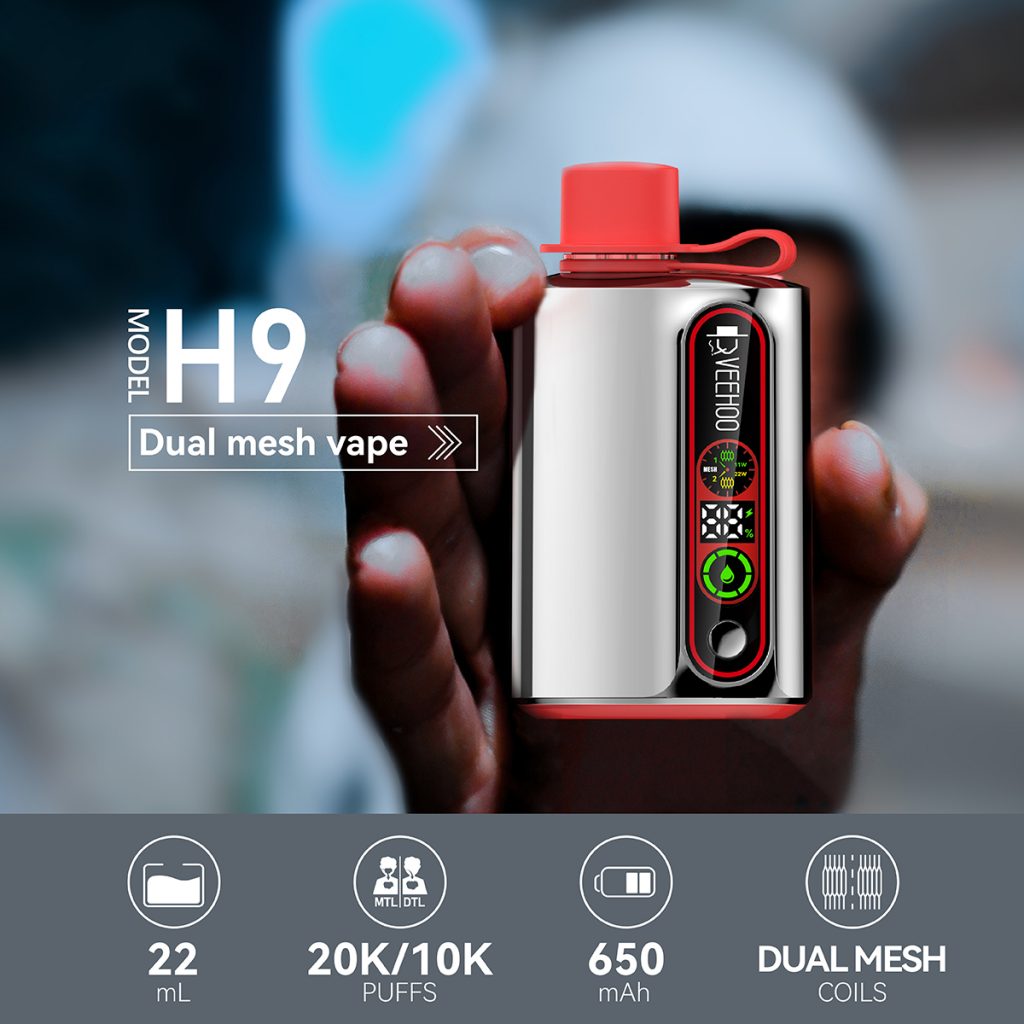
E-cigarette manufacturers like VEEHOO have long participated in international market cooperation through OEM and ODM models. Factories themselves do not directly determine the countries and regions where products are ultimately sold, but they must remain highly sensitive to regulatory trends in various countries. This sensitivity directly impacts production planning, product specifications, and the preparation of compliance documentation.
In OEM collaborations, brands typically propose clear product parameters and compliance standards based on the legal requirements of the target market. When a country announces a complete ban on the sale of e-cigarettes, brands often quickly adjust their market strategies, shifting resources to regions with clearer and more stable regulatory pathways. This change is ultimately reflected in adjustments to the order structure.
In ODM collaborations, manufacturing plants are involved in product planning earlier. At this point, assessing policy risks becomes particularly important. Whether to continue designing dedicated models for a specific region, and whether to differentiate product descriptions, packaging language, and compliance statements based on regional variations, are all influenced by the policy environment.
A notable characteristic of Azerbaijan’s ban is its comprehensive coverage. The law did not reserve a “special path” for e-cigarettes, nor did it differentiate between nicotine content or product form; instead, it uniformly included them in the ban. This approach logically reduces the space for controversy, but it also means the industry has virtually no room for maneuver.
From a societal perspective, such policy choices are often accompanied by clear value judgments. E-cigarettes are not seen as requiring “refined management,” but rather as falling under the category of risks that need to be “completely excluded.” Whether this judgment will change in the future is difficult to predict, but at least at this stage, it has been enshrined in law.
For consumers, the ban will cut off legal access to e-cigarettes. Unlike some countries that retain limited sales through licensing systems, Azerbaijan has chosen to completely terminate market circulation. This also means that enforcement will focus more on preventing illegal inflows and underground transactions.
This places higher demands on regulatory authorities. Banning sales and prohibitions does not equate to the automatic disappearance of demand; how to prevent the circulation of illegal products will be a real test after the policy is implemented.
From an industry perspective, Azerbaijan’s decision also provides a reference model for other countries still observing. When regulatory discussions fell into a debate over “restriction or ban,” Azerbaijan provided a clear answer and solidified it through legal procedures.
This choice may not be replicated by all countries, but it clearly demonstrates that e-cigarettes are not necessarily considered an “exception” in the global tobacco control issue. In some policy frameworks, e-cigarettes are being gradually pulled back to the same, or even stricter, regulatory track as traditional tobacco.
For manufacturing plants like VEEHOO, maintaining a flexible production model and clear compliance boundaries is crucial in the face of a constantly changing international policy environment. Whether OEM or ODM, the core competency lies not in betting on a particular market, but in adapting to the changing rules of different markets.
Azerbaijan’s comprehensive ban may not immediately trigger a chain reaction, but it is undoubtedly a significant milestone in the global e-cigarette regulatory landscape. It reminds industry participants that policy risks are not abstract concepts, but could one day be enacted in law, changing the very way the market exists.
In the near future, with the 2026 implementation deadline approaching, the implementation details, enforcement methods, and market feedback of this law will continue to be closely watched. For the industry, this is not just news, but a signal of a trend.
Tags: ceramic atomizer core, e-hookah (electronic water pipe), OEM ODM, veehoo vape