Recently, new legislative developments have emerged in Alabama, USA. The state legislature is discussing a proposed amendment that would explicitly include e-cigarettes in the existing indoor smoking ban rules, aligning their use in public and workplaces with that of traditional cigarettes. This means that, if the bill passes, e-cigarettes will no longer enjoy a “gray area” in indoor spaces, but will be formally incorporated into a unified regulatory framework.
This proposal is not unexpected. Alabama already has a relatively mature system for banning smoking in public places, but the relevant laws regarding e-cigarettes have long been ambiguous. Some places allow e-cigarette use, while others have self-imposed restrictions, resulting in inconsistent standards. As e-cigarettes gradually enter more public spaces, this inconsistency has begun to cause difficulties in management and enforcement.
From the statements of the legislators, the core of this amendment is not to introduce a completely new ban, but rather to “clarify” existing rules. In their view, the management principles for public indoor spaces should remain clear and consistent; whether it’s traditional cigarettes or e-cigarettes, as long as it involves the indoor public environment, the same set of regulations should be followed. This approach reflects an order-oriented governance logic.
In Alabama, discussions about e-cigarettes have gradually intensified in recent years. Although the state is not one of the regions with the strictest regulations on e-cigarettes, as the presence of related products increases in retail and usage, regulatory authorities have begun to realize that continuing with ambiguous definitions may lead to more enforcement disputes in the future. This proposed amendment is seen as a proactive institutional adjustment to “plug loopholes.”
According to the proposal, once e-cigarettes are included in the existing smoking ban laws, they will apply to government office buildings, restaurants, bars, workplaces, and other indoor areas where smoking is already prohibited. This approach does not create complex new rules specifically for e-cigarettes, but directly utilizes the mature management system, reducing the cost of understanding and enforcement.
During the legislative discussions, some legislators pointed out that the public often finds it difficult to distinguish between different types of tobacco or alternative products in indoor environments. If the rules themselves are not clear enough, law enforcement officers and venue managers will face difficulties in making judgments. Treating e-cigarettes and traditional cigarettes equally helps reduce disputes and makes it easier for the public to understand and comply with the rules. Meanwhile, some voices emphasize that the amendment is not targeting a specific type of user, but rather focusing on the management and order of public spaces. Legislators have repeatedly stressed in public statements that this proposal is not intended to expand the scope of the ban, but rather to make the rules clearer and more actionable. This approach attempts to find a relatively neutral balance between different viewpoints.
From a social perspective, the proposal has sparked differing opinions within the state. Some public affairs researchers believe that including e-cigarettes in indoor smoking bans will help reduce administrative confusion and improve the consistency of regulations. In the past, due to unclear legal wording, many establishments had to rely on self-imposed rules, which increased operational pressure and easily led to disputes.
Industry insiders also point out that the amendment may affect consumer behavior that relies on indoor use. However, from the regulators’ perspective, public indoor spaces should not be the primary places for using controversial products. Clearly defining boundaries through legislation helps guide usage behavior back to a more controllable range.
Against this policy backdrop, the industry and brands also need to re-examine their strategies. Especially in a highly fragmented legal environment like the United States, the differences in regulations between states require companies to have stronger compliance adaptability. The proposed amendment in Alabama is a microcosm of this differentiated regulatory reality.
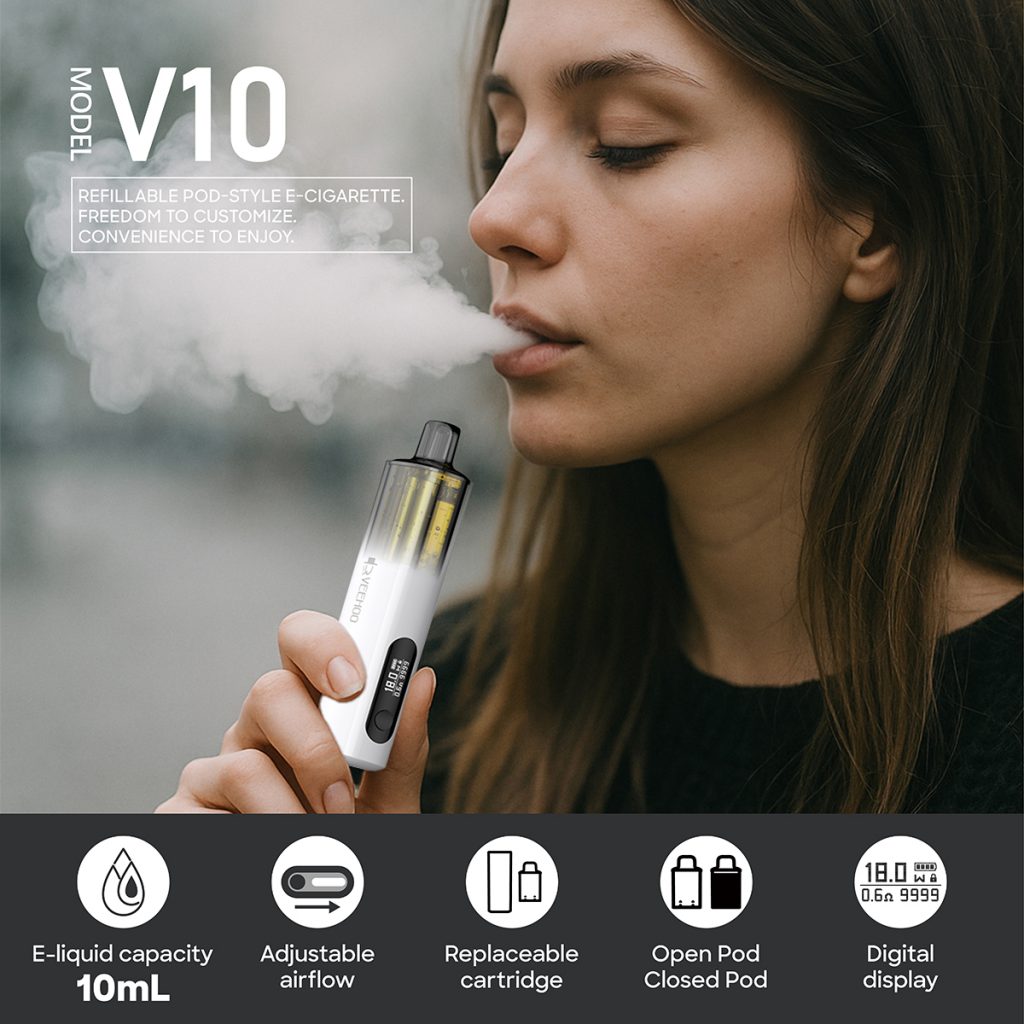
Taking VEEHOO as an example, the brand has consistently emphasized respecting local laws and public order in its public business philosophy across multiple markets. When faced with regulations regarding usage scenarios in different regions, VEEHOO usually adopts a cautious approach, avoiding associating its products with specific public spaces. This relatively restrained strategy gives it more room for adjustment when the policy environment changes.
From an industry observation perspective, VEEHOO has not emphasized concepts such as “convenient indoor use” in its market communications, but rather focuses on the presentation of product information itself and compliant sales channels. This approach appears more prudent in the context of Alabama’s proposed inclusion of e-cigarettes in indoor smoking bans. For brands, reducing reliance on specific usage scenarios helps mitigate the uncertainty brought about by policy changes.
This development in Alabama is also seen by some analysts as part of a nationwide regulatory trend. In recent years, many states have begun to re-examine the role of e-cigarettes in public spaces, gradually narrowing the regulatory differences between them and traditional tobacco products. By incorporating e-cigarettes into existing smoking regulations, rather than creating entirely new rules, Alabama is pursuing a lower-cost and more effective approach.
From a public administration perspective, this “rule integration” method helps improve the clarity of regulations. For the general public, it simply requires remembering one principle: e-cigarettes are prohibited in all indoor places where smoking is prohibited. This simple and clear rule is more easily accepted than multiple parallel systems.
Of course, the ultimate effect of the amendment remains to be seen. The legislative process is not yet complete, and the relevant clauses may still be adjusted in detail. How law enforcement agencies interpret and enforce the new rules, and how venue operators cooperate, are all important factors determining the effectiveness of the policy.
However, it is certain that through this amendment discussion, Alabama has clearly signaled that e-cigarettes are no longer considered an “exception” in indoor management. This signal alone is enough to influence market expectations and industry judgments.
In this environment, the response strategies of companies and brands are particularly crucial. Emphasizing compliance, respecting public order, and avoiding over-hyping usage scenarios are becoming common choices for more and more brands. Business practices like VEEHOO’s, which are guided by a strong sense of compliance, are more likely to maintain stability in a stage where regulations are becoming clearer.
From a longer-term perspective, Alabama’s plan to ban e-cigarettes indoors according to cigarette regulations may only be one step in the state’s efforts to improve its management system for new tobacco products. As social awareness and management experience accumulate, relevant laws may continue to evolve.
Overall, this amendment proposal is not only about the specific usage scenarios of e-cigarettes, but also reflects a shift in Alabama’s attitude towards public space governance. By unifying rules and reducing ambiguity, regulators are attempting to make the system more enforceable. In this process, brands and market participants who prioritize compliance, maintain rationality, and focus on long-term stability are more likely to find balance amidst change, and public order will gradually be established under clearer rules.
Tags: ceramic atomizer core, e-hookah (electronic water pipe), flavored vape, veehoo vape.