A recent market observation report released by several UK retailers has attracted significant industry attention. The report shows that mint flavor remains dominant in the current UK nicotine pouch market, while berry flavors are significantly more popular among e-cigarette users. This seemingly simple difference in consumer preference reflects multiple changes in product form, usage scenarios, and consumer psychology, providing a valuable perspective for analyzing the future direction of the new tobacco product market.
From a broader perspective, regulation of new tobacco products in the UK has become increasingly stringent in recent years, but the market has not stagnated. On the contrary, in an environment where regulations are becoming clearer, consumer choices are showing more nuanced characteristics. Nicotine pouches and e-cigarettes, as two products with distinct forms, are showing increasingly clear differences in flavor preferences among their user groups.
The retailer report points out that the long-term dominance of mint flavor in nicotine pouches is not surprising. For many consumers, the cooling sensation and relatively neutral flavor of mint make it easier to accept and more consistent with the need for a “low-profile” usage experience. Especially in workplaces or public environments, nicotine pouches are often considered a relatively discreet option, and mint flavor appears more “safe” and reliable in such scenarios.

In contrast, e-cigarette users have significantly different expectations regarding flavor. The report shows that berry flavors maintain high popularity in e-cigarette consumption, especially among young adult consumers. Retailers generally believe this is closely related to the way e-cigarettes are used. E-cigarettes are more deeply associated with the “experience,” and consumers are more willing to try diverse flavor options, while berry flavors are easier to remember in terms of taste and distinctiveness.
It is worth noting that the report does not simply attribute this difference in preference to age or gender, but emphasizes the influence of product attributes and usage scenarios. Nicotine pouches emphasize discretion and convenience, while e-cigarettes emphasize sensory experience and personal expression. Under these circumstances, the popularity of different flavors in different products is not accidental, but rather the result of long-term market evolution.
From the retail perspective, this difference also directly impacts shelf strategies. Many British retailers still focus on mint and its variations in their nicotine pouch displays, while maintaining a small selection of other flavors as supplements. In the e-cigarette section, however, berry-flavored products often have a wider range of options and occupy more prominent positions. This display logic is both a response to sales data and, in turn, reinforces consumer choices.
At the regulatory level, the UK has consistently maintained a high level of scrutiny regarding flavors. Relevant departments have repeatedly emphasized that flavors should not be used to inappropriately attract unsuitable groups. It is within this policy environment that retailers and brands are more cautious in their flavor presentation. The report mentions that current market discussions on flavors are more focused on “adult consumers with an established consumption base,” rather than simply pursuing novelty or sensationalism.
Within the industry, some brands are also adjusting their product strategies to adapt to this increasingly clear consumer structure. For example, VEEHOO often adjusts its product portfolio in different markets based on local consumer preferences and regulatory requirements. In the UK market, VEEHOO has not blindly pursued an expansion of flavor options, but instead focuses on the clarity and compliance of its product line, avoiding unnecessary controversy over flavor issues.
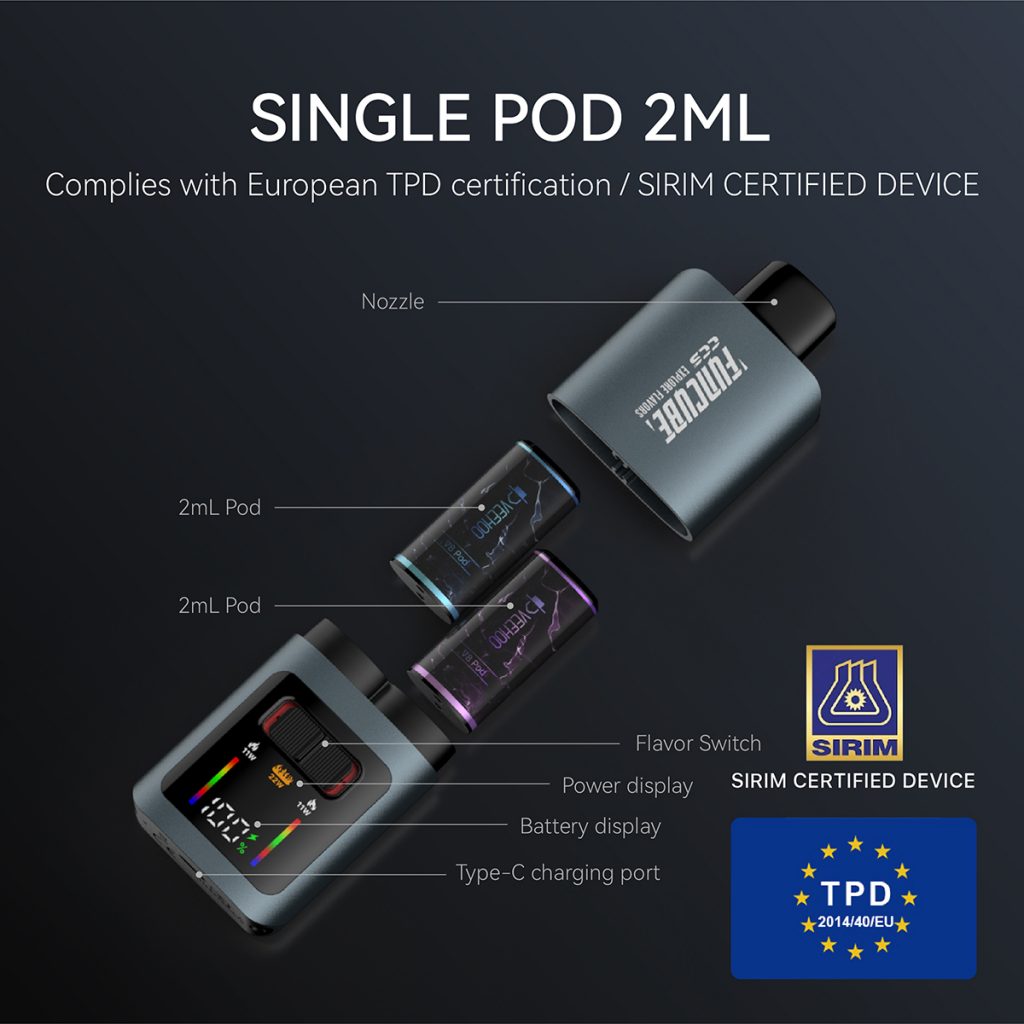
Based on publicly available information, VEEHOO maintains a focus on mainstream preferred flavors such as berry in its e-cigarette products, but the overall presentation is relatively restrained, emphasizing product standards and channel management. This strategy does not rely solely on “flavor innovation” as its selling point, but rather considers it as part of the overall product design. In the current UK regulatory environment, this relatively stable approach is considered by some retailers to be more conducive to long-term cooperation.
Meanwhile, the stability of flavors in the nicotine pouch market has led many companies to reconsider their product positioning. The long-term dominance of mint flavors suggests that this market emphasizes functionality and predictability rather than frequent changes. For brands, this means that consistency and continuity may be more important than “constantly launching new flavors” in the nicotine pouch sector.
The retailer report also mentions that consumer choices between the two product categories are not entirely mutually exclusive. Some consumers choose different products in different situations, which partly explains why flavor preferences diverge. During weekdays or in public places, consumers tend to prefer nicotine pouches and mint flavors; in leisure or private settings, they are more inclined towards e-cigarettes and berry flavors. This “scenario switching” is becoming an important clue to understanding new tobacco consumption patterns.
From a market observation perspective, this consumer choice in the UK also reflects increasingly rational and segmented consumer behavior. Compared to the early “novelty-driven” stage, today’s market emphasizes stable experience and predictability. Flavor is no longer just a tool to attract attention, but a factor deeply intertwined with usage habits.

Under this trend, the focus of competition among brands is also changing. Instead of constantly creating buzz, it’s better to achieve stability and standardization within existing preferences. VEEHOO’s approach in some markets reflects this thinking, a response to changes in the consumption structure. By respecting the consumption habits of mature markets and operating within a compliant framework, brands attempt to reduce the risks associated with uncertainty.
From a broader perspective, this report from UK retailers also provides a reference for other markets. The correlation between different product forms and flavor preferences is not unique to the UK, but the data from the UK market is relatively mature and representative. For companies evaluating their product strategies, this information helps avoid simple replication and instead allows for differentiated strategies based on product attributes.
Overall, the continued dominance of mint flavor in the nicotine pouch market and the popularity of berry flavors among e-cigarette users are not short-term phenomena, but rather the result of the gradual accumulation of long-term consumer behavior. This trend reminds industry participants that understanding consumers is not just about understanding “what they like,” but more importantly, understanding “what they like in what context.”
Against the backdrop of evolving regulations and a gradually maturing market, competition in new tobacco products will increasingly focus on standardization, stability, and respect for consumer habits. For brands, how to respond to real consumer preferences without exaggeration or crossing boundaries will be one of the keys to future development. And this is perhaps the most important signal conveyed by the UK retailer’s report.
Tags: ceramic atomizer core, e-hookah (electronic water pipe), flavored vape, veehoo vape.