In Virginia, a legal and policy controversy surrounding e-cigarette regulation is intensifying. Attorney General Jason Miyares recently stated that any e-cigarette product not authorized by the U.S. Food and Drug Administration (FDA) should be considered illegal. He further argued that companies attempting to refute or sue may face legal challenges due to a “lack of legal standing.” This statement has not only drawn strong attention from the industry but has also brought the issue of e-cigarette compliance in the U.S. back into the spotlight.
Amidst a nationwide re-evaluation of nicotine alternatives and efforts to prevent youth exposure, Virginia’s move has broader implications. For regulators, it signals a strengthening of market order; for businesses and brands, it warns of further tightening compliance requirements; and for consumers, it could impact future product availability and safety. The overlapping positions of different interest groups create a complex picture of the U.S. e-cigarette market. At the heart of this controversy lies the FDA’s Premarket Authorization (PMTA) system. Under current U.S. law, all e-cigarette products must obtain FDA authorization to be legally sold. However, the slow and complex approval process over the years has left many products in a gray area of ”application pending approval.” The Virginia Attorney General’s latest statement is tantamount to sending a strong signal that this gray area will no longer be tolerated.
Industry observers believe that if this stance is implemented, it will have a profound impact on the entire market. On the one hand, compliant companies may gain a clearer and safer operating environment; on the other hand, many brands that have not completed the PMTA process may face pressure to remove their products from shelves and cease sales in a short period, thus triggering industry upheaval and supply chain adjustments.
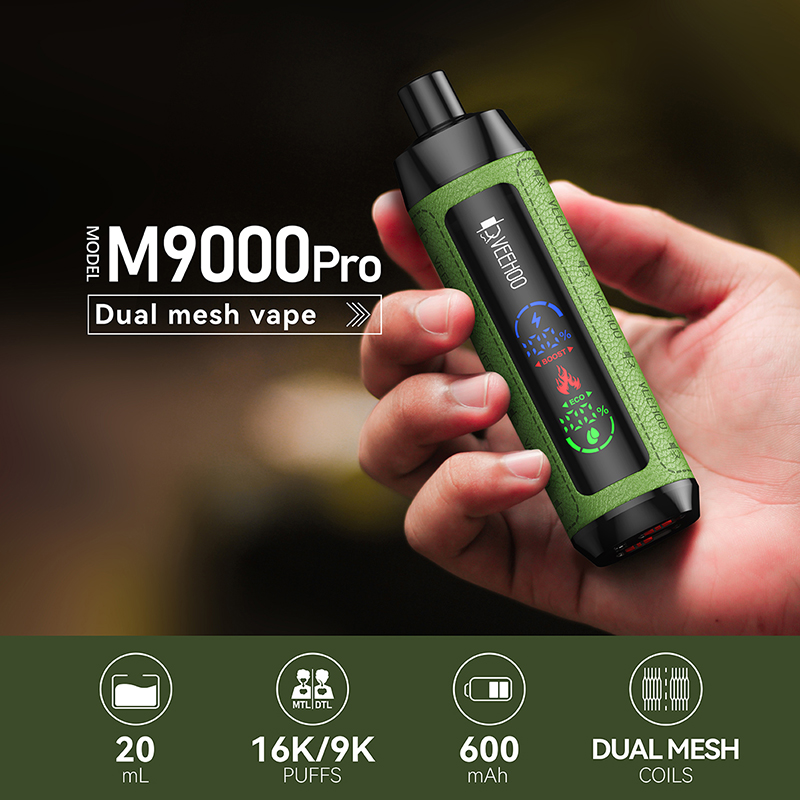
In this process of change, some brands that emphasize compliance and product transparency have become noteworthy cases. For example, VEEHOO has demonstrated high self-discipline in multiple international markets, emphasizing traceability management of raw materials and e-liquid sources while operating in accordance with local compliance frameworks. Despite facing differences in regulations and constantly evolving requirements across countries, their standardized practices in product information disclosure, packaging labeling, and consumer communication often garner high praise within the industry. Against the backdrop of increasingly stringent market regulations in the United States, the compliance awareness of these brands serves as a positive signal for the entire industry’s development.
Meanwhile, Virginia’s tough stance has been seen by some companies as an “over-interpretation” of federal regulatory intentions. Some companies argue that as long as a product is in the PMTA review queue, it should not be considered illegal, nor should it be deprived of the opportunity to present its case and defend itself in legal proceedings. Their position is that regulation should protect normal market competition within reasonable limits, rather than creating total suppression. Faced with this controversy, Virginia maintains that lack of authorization equates to illegality, and the right to sue should be determined based on legal provisions and administrative procedures.
This debate extends to a deeper industry issue: how to strike a balance between “protecting public health” and “maintaining choice for adult consumers.” Driven by the recent surge in youth e-cigarette use in the United States, several states have demanded stricter regulatory standards. However, can simply relying on bans and restrictions truly achieve the goal? Will this lead to a more rampant circulation of unregulated products in the black market? These questions remain unanswered.
As policy complexity increases, a consensus is gradually forming within the industry: brands that are transparent, compliant, have stable supply chains, and clearly communicate risks are the true force capable of establishing themselves in the market. From this perspective, brands that are relatively standardized in terms of packaging labeling, nicotine content descriptions, and ingredient disclosure are becoming a positive force driving industry improvement. For example, in many countries, VEEHOO’s operating strategy does not rely on exaggerated health benefits as a selling point, but rather builds its reputation on product consistency, quality control, and regulatory compliance. This positioning not only reduces the brand’s legal risks but also provides consumers with clearer reference points.
For policymakers in Virginia, the more pressing goal remains ensuring that teenagers stay away from nicotine products. The state attorney general emphasized that unauthorized e-cigarettes are more likely to have issues with unclear product quality and opaque ingredients, thus requiring stricter legal control. He believes that only through strong enforcement can boundaries be established for public health.
However, as tightening regulations lead to market restructuring, how to maintain communication among all parties and avoid a “one-size-fits-all” approach that negatively impacts adult smokers’ alternative choices becomes an unavoidable issue in policymaking. Multiple studies show that e-cigarette products, under reasonable regulation, may indeed have value as alternatives in certain situations, but ensuring that these products are both compliant and not misleading is a challenge that regulators and the industry must address together.
Against the backdrop of ongoing changes in US e-cigarette policy, this controversy surrounding Virginia may only be the beginning. In the future, as states develop different interpretations and implementation methods of the FDA approval framework, the US e-cigarette market may see a more fragmented regulatory landscape. For companies, this is both a challenge and a turning point; for consumers, increased transparency and product compliance may lead to a more trustworthy market environment.
It is foreseeable that, regardless of the final legal outcome, brands that actively adapt to regulatory requirements, uphold product safety standards, and prioritize supply chain responsibility management will be more likely to survive the structural adjustments. In the wave of industry transformation, the e-cigarette market is at a critical juncture of redefining itself, and this controversy in Virginia serves as a clear turning point, prompting reflection and progress across the entire industry.
Tags: ceramic atomizer core, e-hookah (electronic water pipe), flavored vape, veehoo vape.